Free
Solo work and small teams.
$0forever
Up to 3 members- All 9 protocols
- All auth types, variables, scripting
- Collection runner + CLI
- Import/export, code generation
- AI assistant
- Peer-to-peer team sync
- 3 collections, 7 days of history
 NEW Git sync and a rebuilt Collection Runner
Axon is a desktop API client for HTTP, GraphQL, gRPC, WebSocket, Socket.IO, SOAP, SSE, MQTT and MCP. Your collections live on your machine and sync peer-to-peer with your team — no account and no cloud workspace required.
press⌘Kfor everything
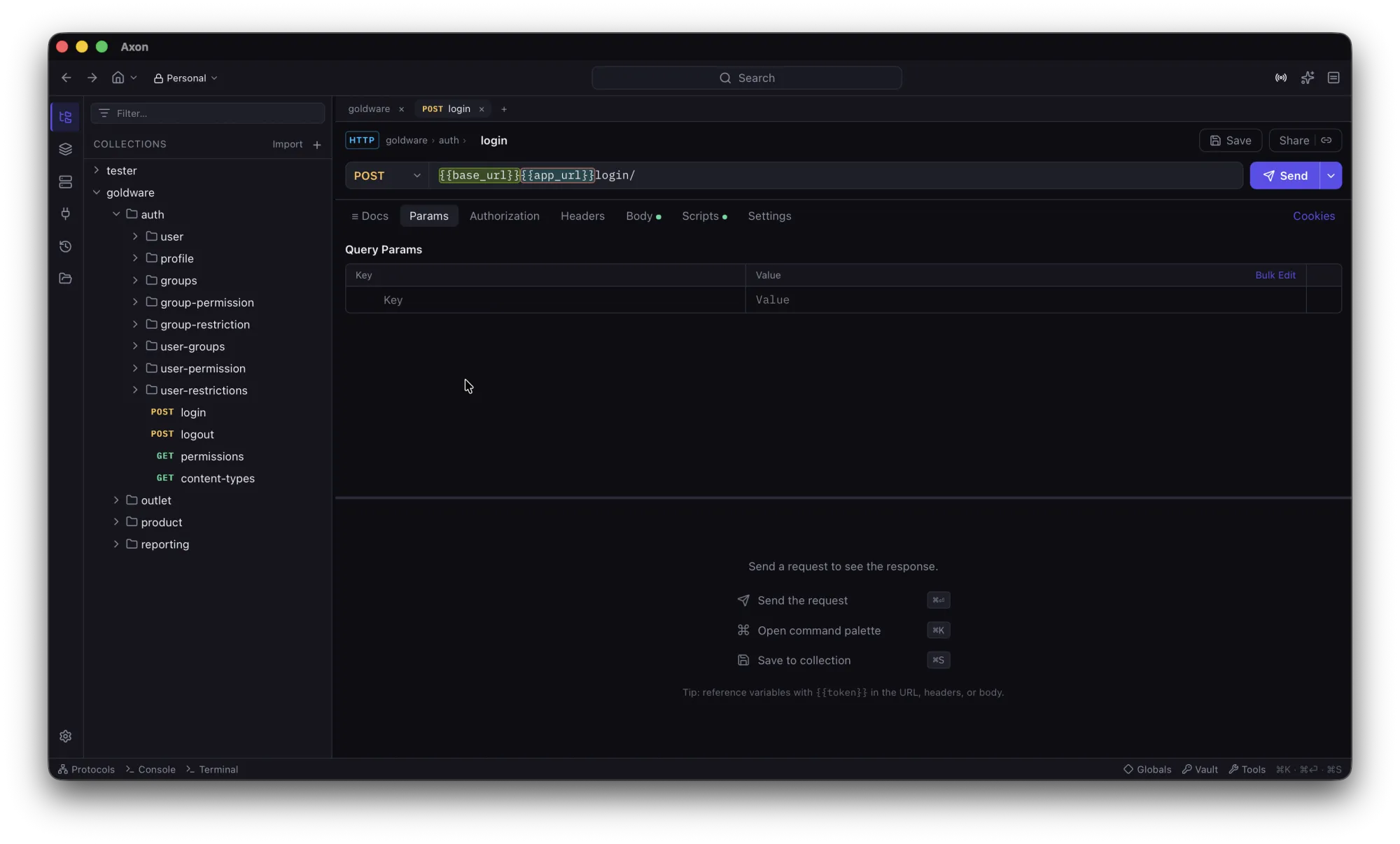
Collections, environments, history and secrets live in a local database. Axon works fully offline and never needs a login.
REST, GraphQL, gRPC, sockets, brokers and MCP servers side by side in the same tabs, with the same variables and auth.
Send with ⌘↵, save with ⌘S, and run any command from the palette. Every shortcut is customizable.
Axon is an offline-first API client built in Rust. You build, send and test requests across nine protocols, organise them into collections, run them in CI with the axon CLI, and share them with teammates directly — device to device — instead of through a hosted workspace.
Each protocol gets an editor built for it — schema introspection for GraphQL, streaming panes for sockets and SSE, topic subscriptions for MQTT, tool calls for MCP.
Method, URL, params, headers and body in one panel. Form-data, binary and raw bodies, a cookie jar, curl import and an auto-generated headers preview.
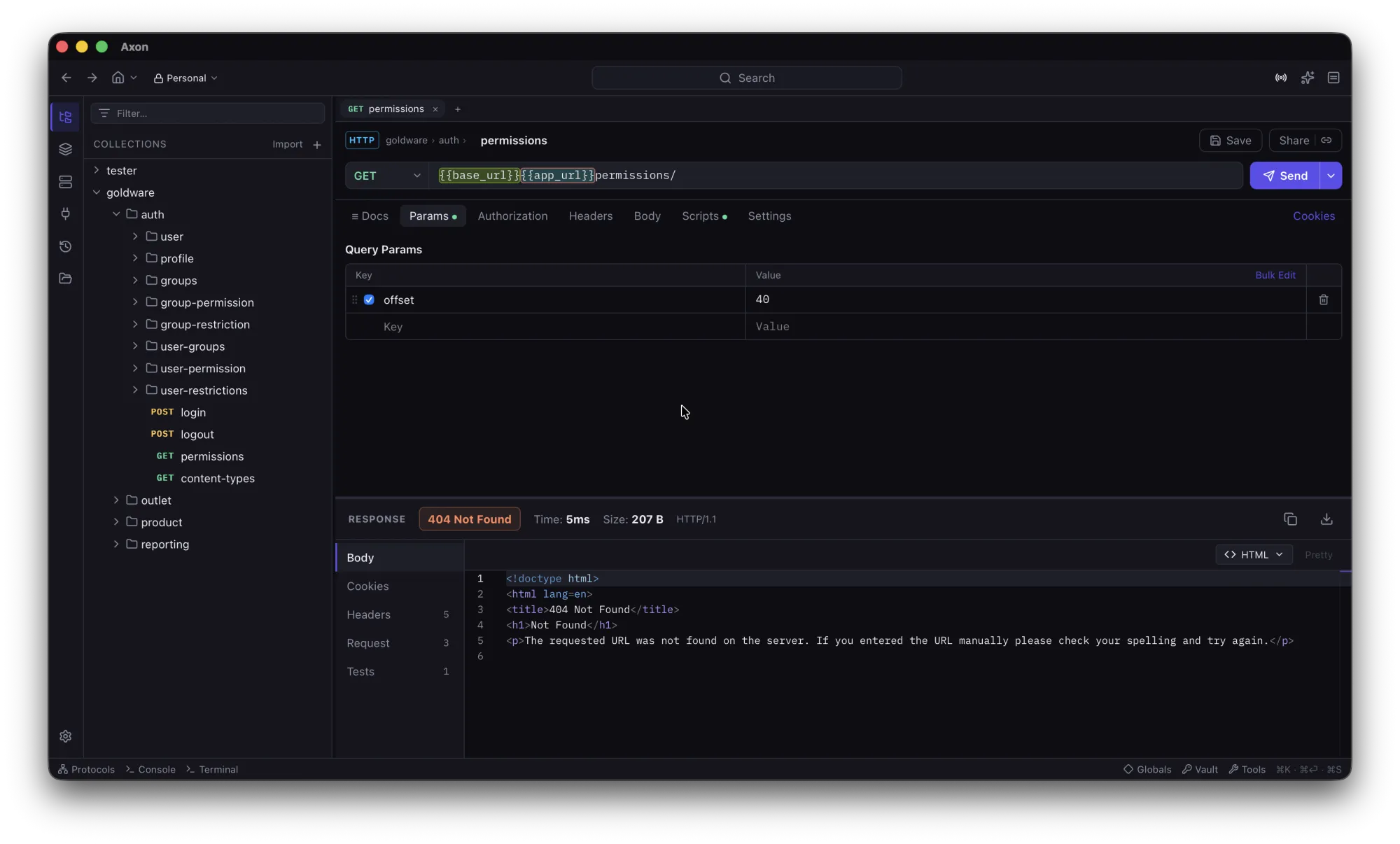
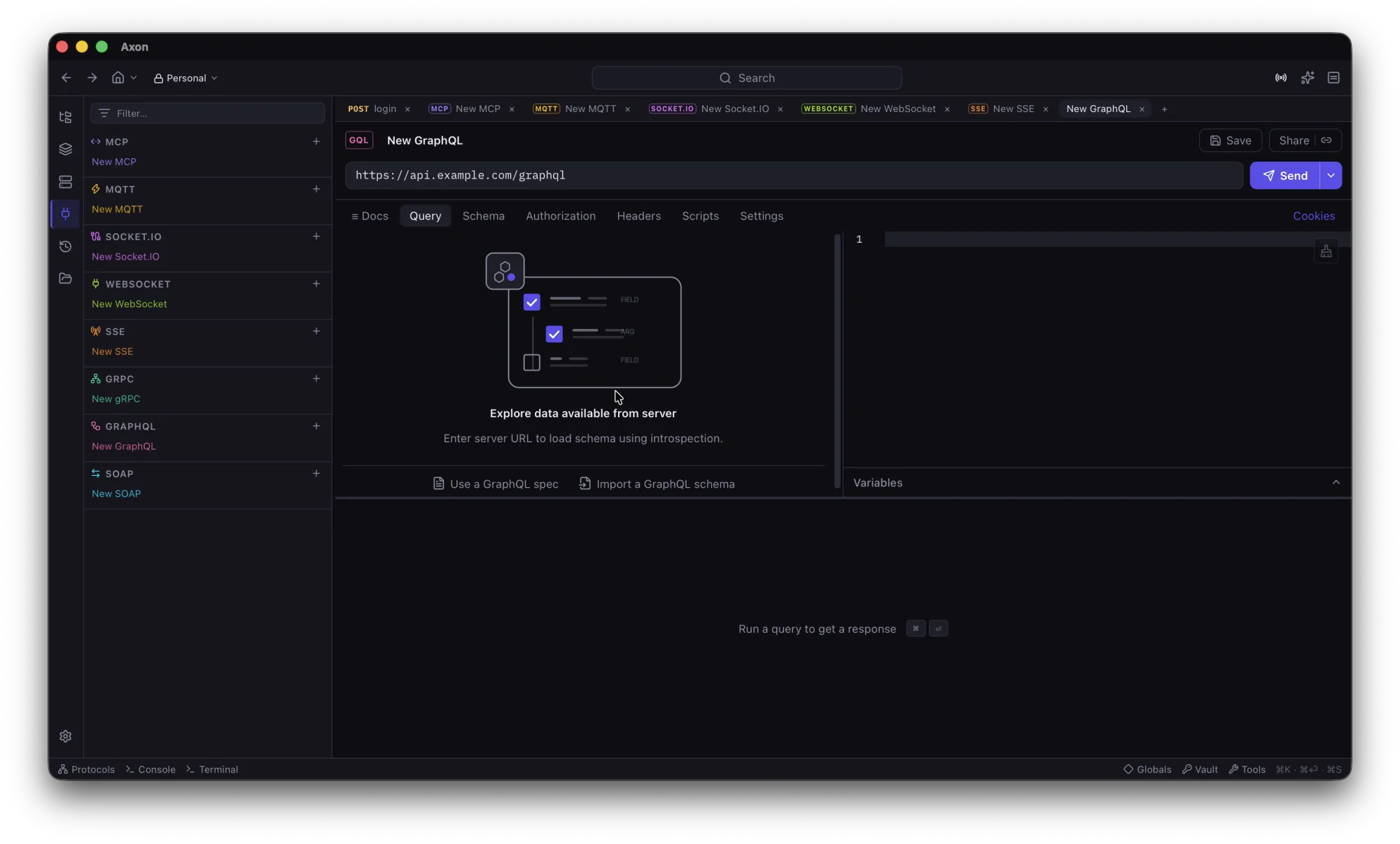
Queries, mutations and subscriptions over graphql-transport-ws, with schema introspection driving field autocomplete and a JSON variables editor.
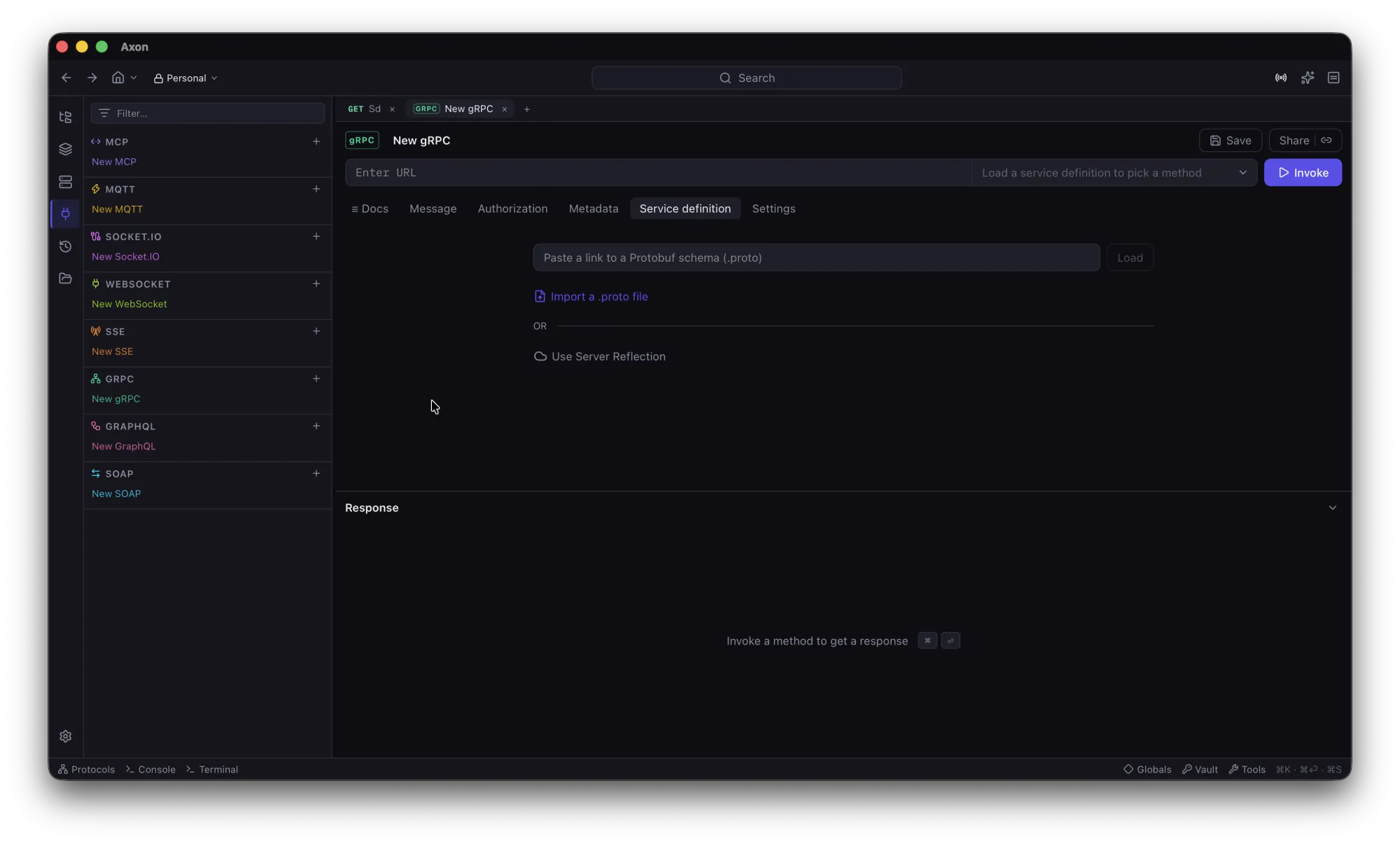
Unary and streaming calls over plaintext or TLS. Load a .proto or use server reflection, then write JSON in and read JSON out — no codegen step.
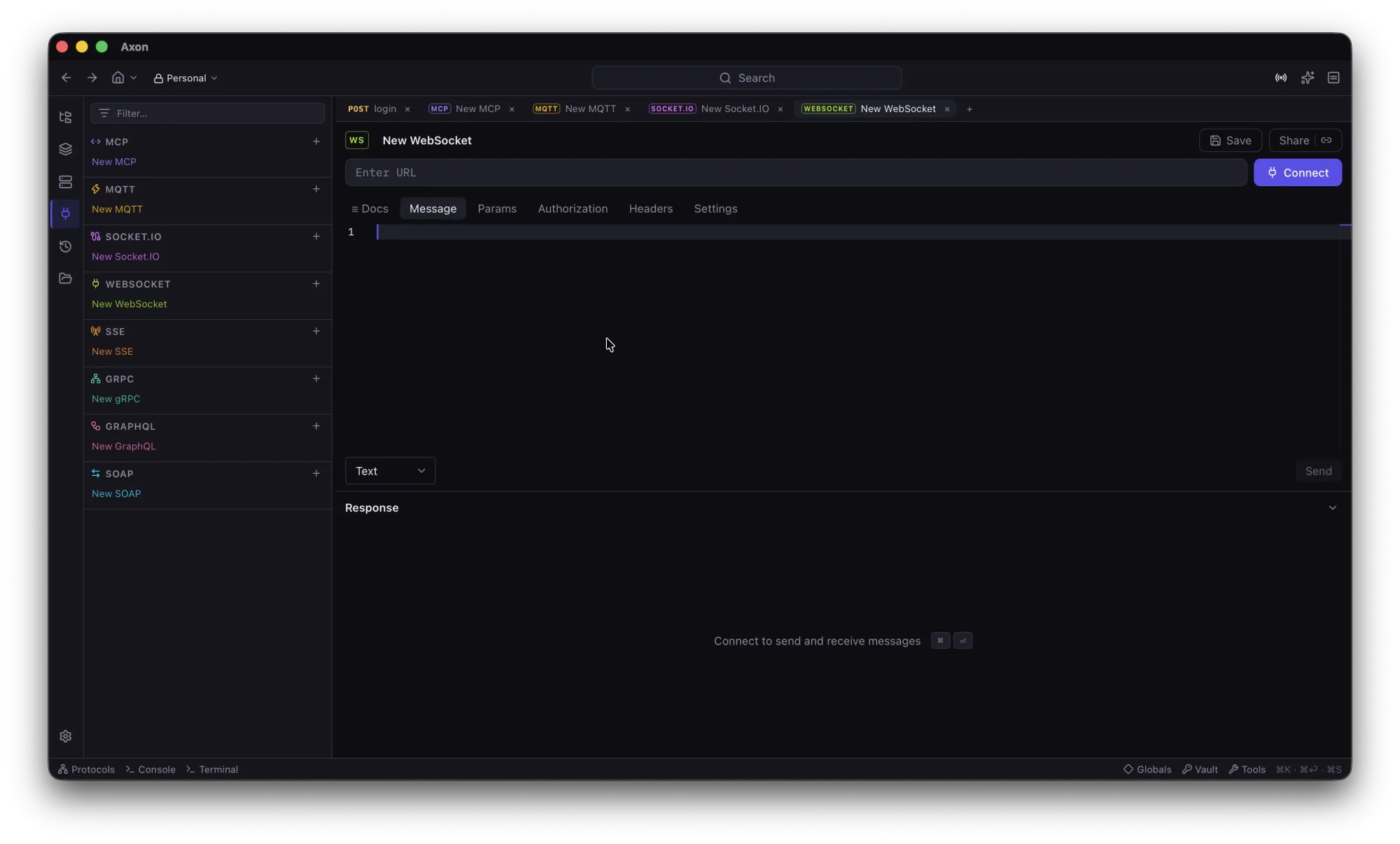
Send text or binary frames, ping, and watch inbound frames in a live log. Reconnect uses exponential backoff with jitter.
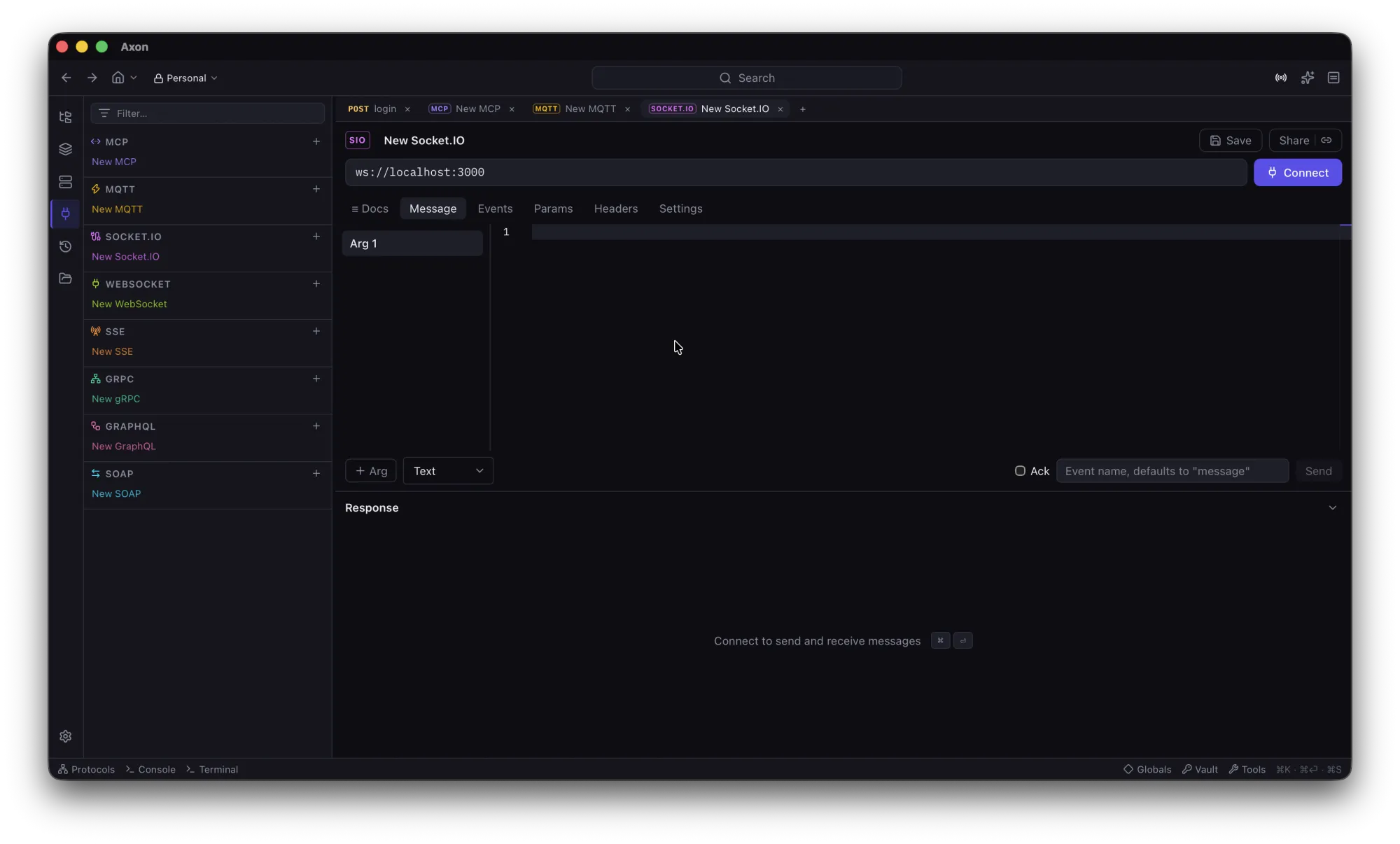
Emit named events with a payload and subscribe to just the events you care about.
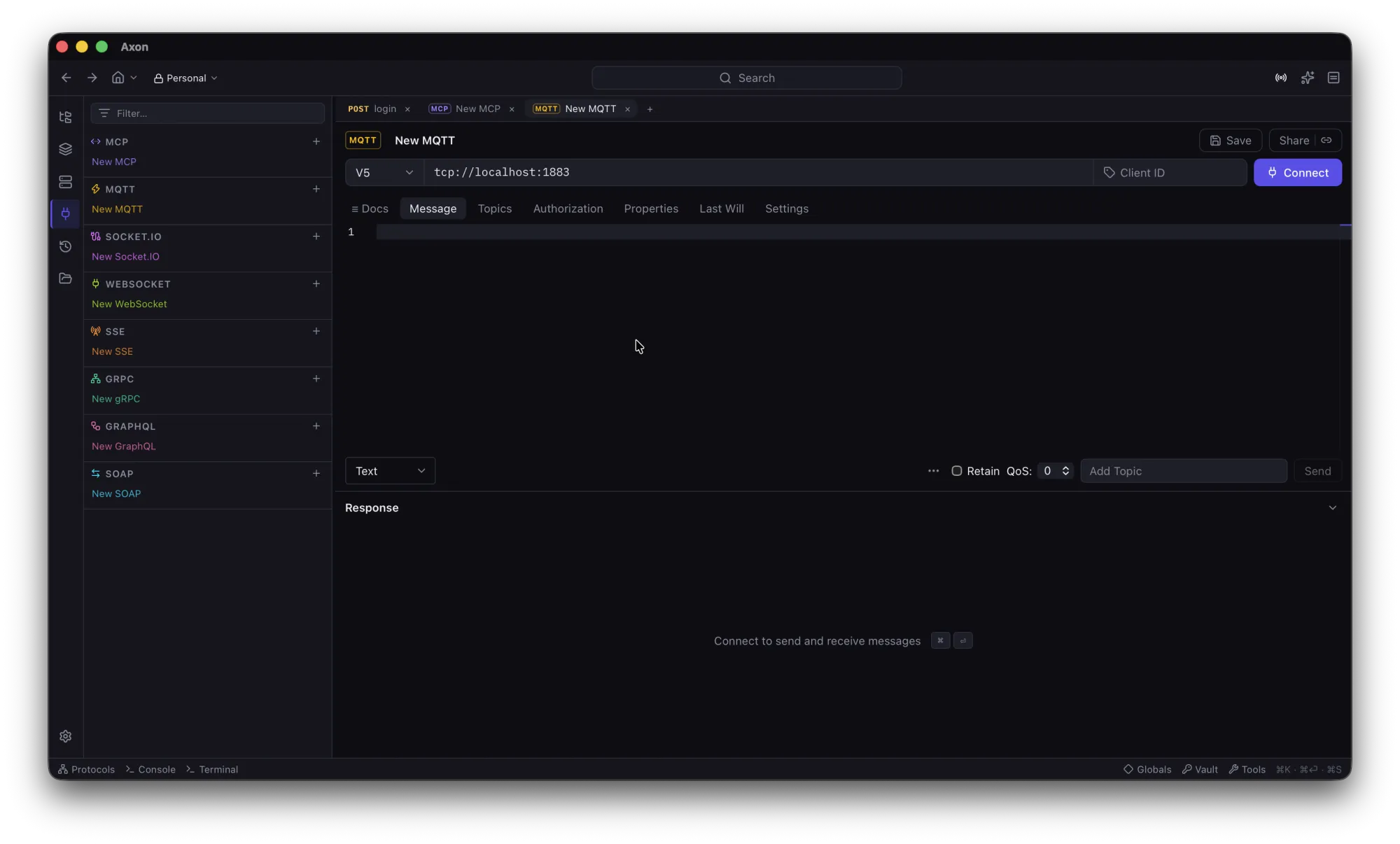
MQTT 3.1.1. Publish once and get the ack, or open a session that subscribes to topics and streams inbound messages into a live log.
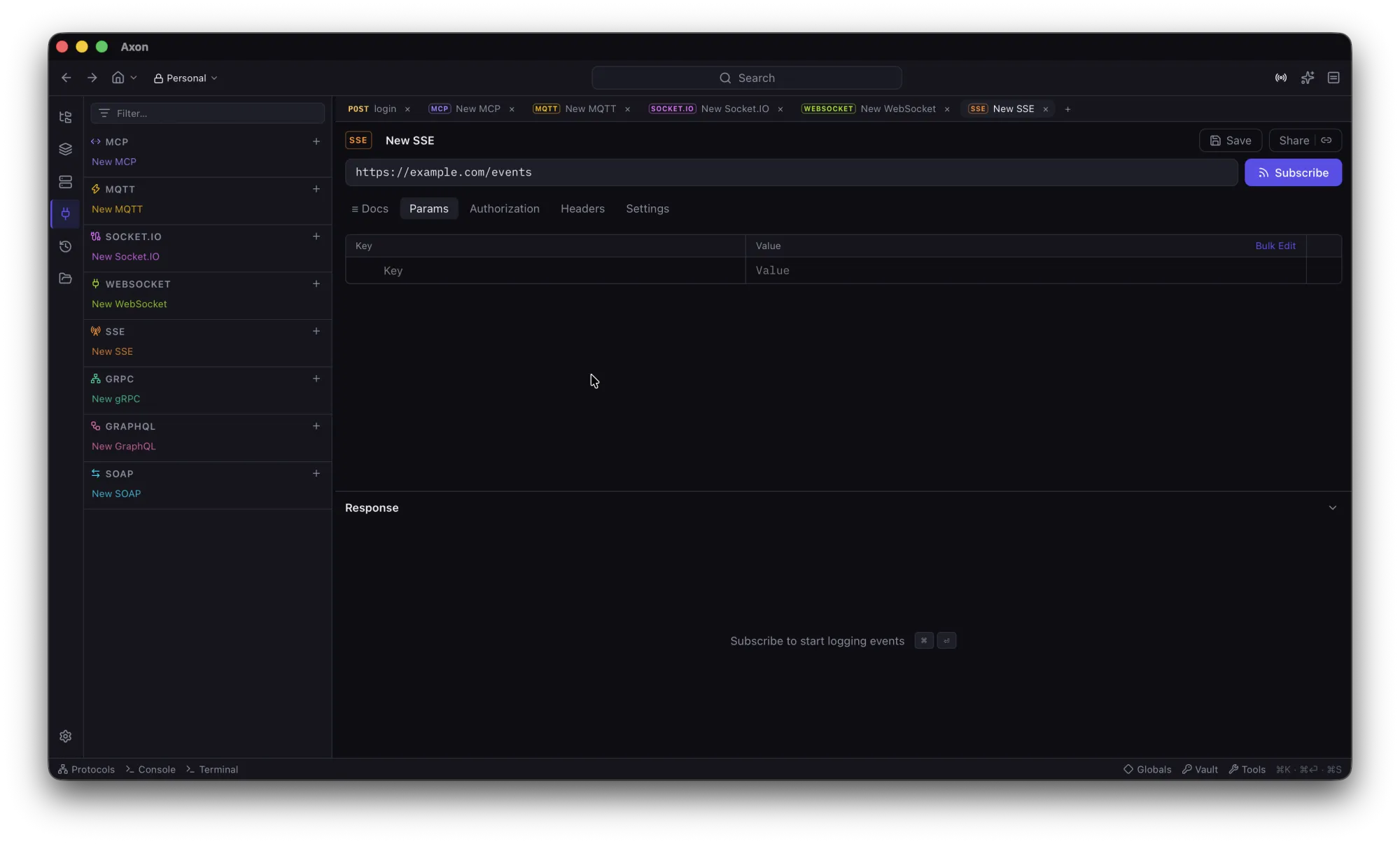
Subscribe to an event stream and watch events arrive with their name, id and data broken out.
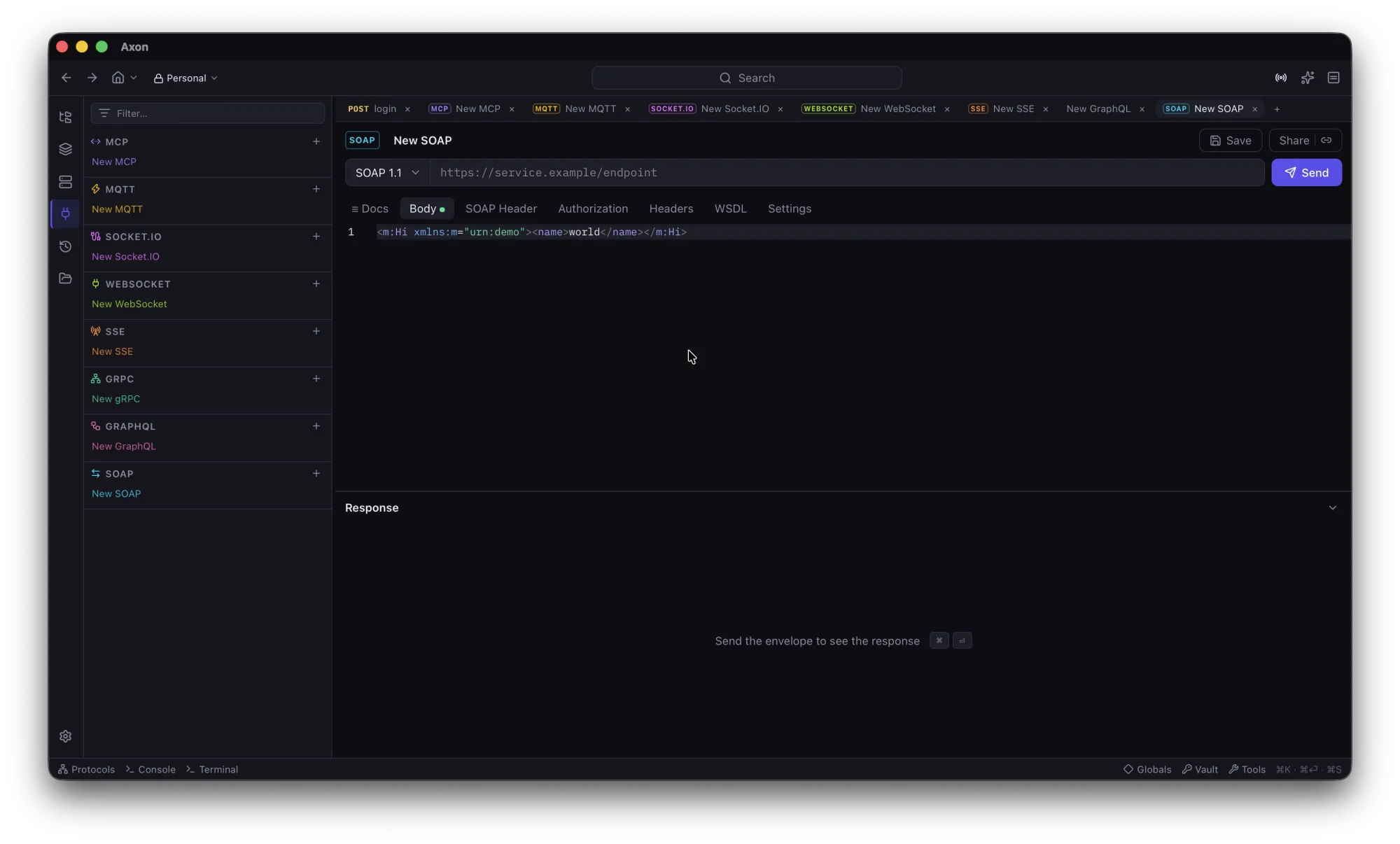
SOAP 1.1 and 1.2 envelopes with the right SOAPAction. Load a WSDL to call operations by name; <soap:Fault> responses are parsed as faults.
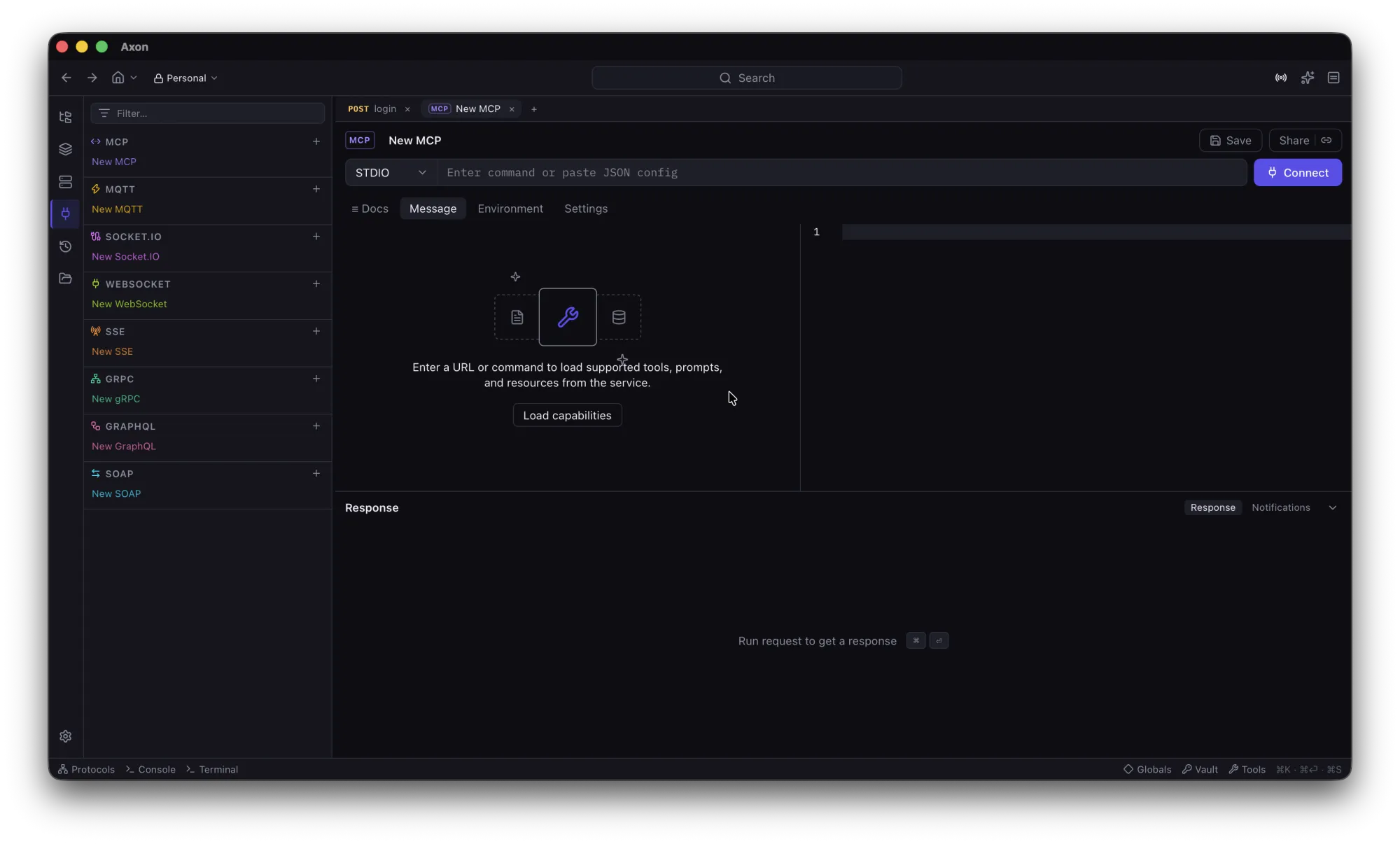
Connect to MCP servers over STDIO or HTTP, probe their tools, prompts and resources, then call a tool from a generated argument editor.
Reference variables anywhere — URL, headers, body — with clear precedence across environment, global and vault scopes, plus dynamic variables.
Tokens and keys are encrypted at rest behind your passphrase, stay out of exports, and never leave your device — not even during team sync.
Basic, Bearer, API key, JWT, OAuth 2.0, Digest and AWS Signature v4, set per request or inherited from the folder.
JavaScript before and after each request to chain calls, set variables, assert responses and validate schemas.
Run a collection with reordering, iterations, CSV/JSON data files and parallelism — then export the report.
Schedule checks against endpoints with retention and alerts, and catch incoming callbacks.
Raw traffic and a shell, docked at the bottom of the window.
Full-text search across requests, collections and workspaces from the top bar.
Light, Dark or follow the system, plus Nebula, Abyss, Solar, Carbon, Ember, Verdigris and Rose. Every shortcut is remappable too.
Proposes tool calls — create and edit requests, run tests — that you review and apply in a batch. Runs via Claude Code or local Ollama.
Separate personal and team workspaces, pair peers over LAN or VPN, and manage or revoke members.
Import from Postman, Insomnia, Bruno, OpenAPI, HAR and curl. Export to JSON/YAML or generate Markdown and HTML docs.
The axon command-line runner executes an exported collection with environments, data files, iterations and parallel workers, and writes HTML, JUnit XML, JSON, Markdown or SARIF reports. Use --bail to fail the build on the first broken test.
# run an exported collection in CI
axon run collection.yaml \
  --env staging.json \
  --data users.csv \
  --iterations 3 --parallel 4 \
  --bail \
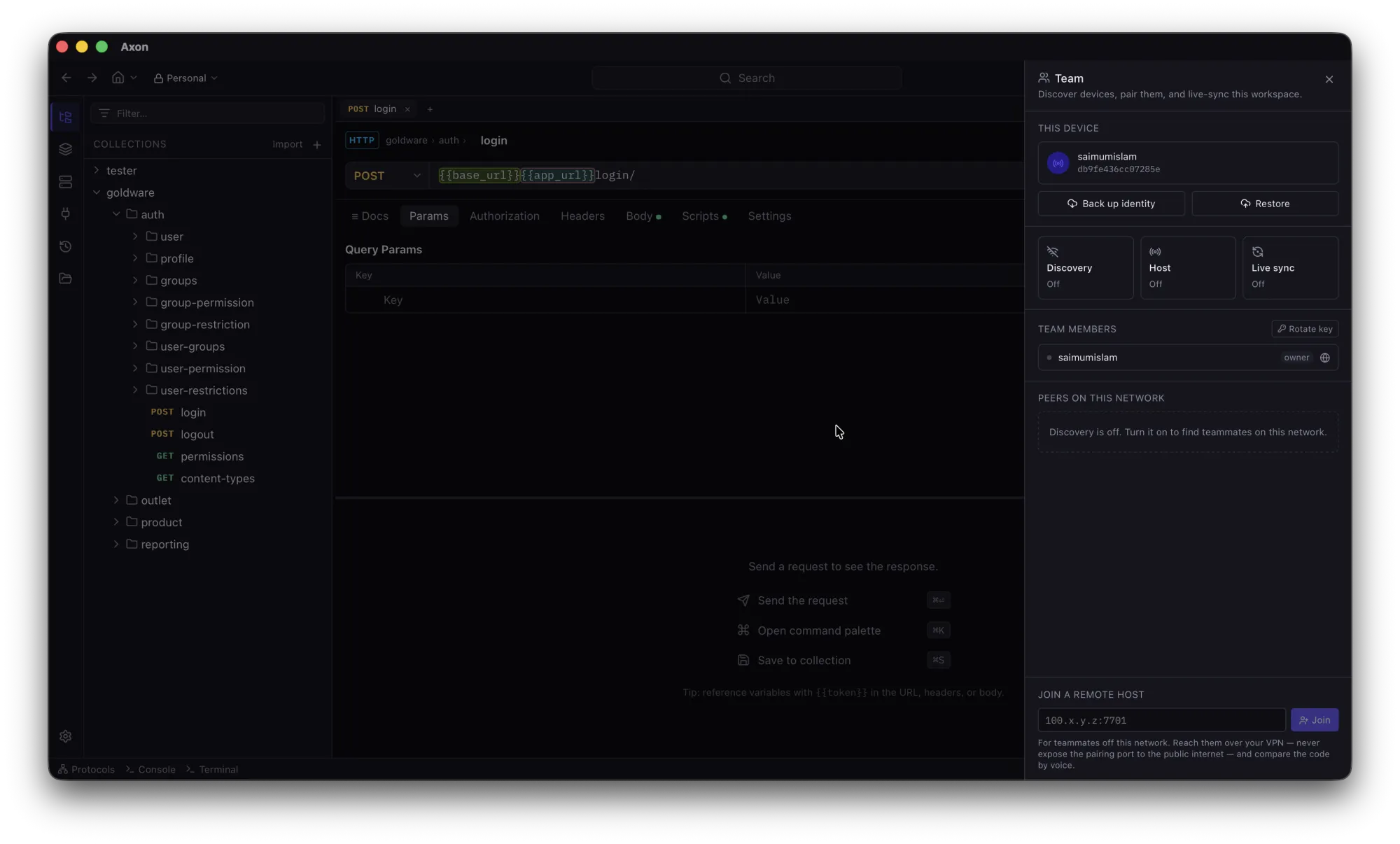
-o report.xml # .html .json .md .sarifDiscover teammates on your network, pair devices, and live-sync a workspace. Working remotely? Join a host over your VPN and confirm the pairing code by voice.
Identities are keys you own — back them up and restore them on a new machine. Read the team sync guide →
Axon has no account, no analytics, no tracking and no crash reporter. On its own it only checks GitHub for updates when it starts — and you can turn that off.
| Data | Where it goes |
|---|---|
| Requests, responses, history | Your device only |
| Vault secrets | Your device only, never synced |
| Collections (with team sync on) | Paired devices, directly, over TLS |
| AI assistant messages | The model provider you chose, only when you send |
| Update check | GitHub, when Axon starts (can be turned off) |
Every protocol, scripting, the runner and CLI, the AI assistant and team sync are free for up to 3 members. Bigger teams pay one flat price for the whole team, not per seat. Prices in USD; yearly billing gets two months free.
Solo work and small teams.
$0forever
Up to 3 membersFor a growing team.
$10$100/month/year
4 to 8 membersRoom to grow.
$30$300/month/year
9 to 15 membersIdentity and governance, on an annual contract.
Customannual contract
16+ membersIf a license lapses, nothing is locked: collections stay on disk and exportable, and team sync goes read-only. Machine-readable pricing: pricing.md.
Recent releases, newest first. Every change — new, improved and fixed — is listed in the full changelog.
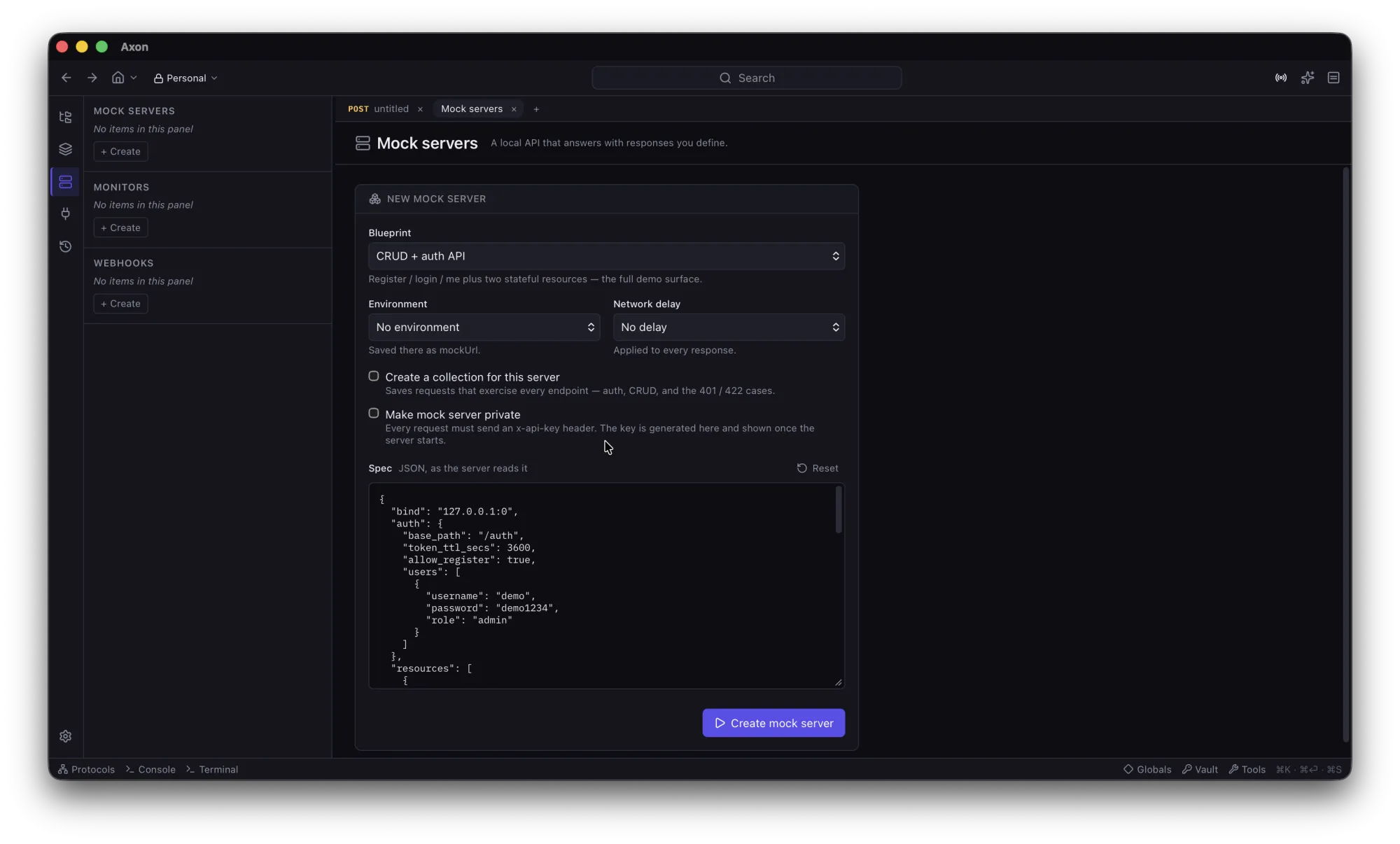
Mirror collections to YAML and commit, pull and push from Axon. Run collections locally, on a schedule or from CI, and add as many monitors as you need.
In-memory CRUD resources and a token-auth layer, a live request log, and Axon's new icon, palette and themes.
Join a remote host over a VPN, back up and restore your device identity, and activate a plan with a license key.
Guides for every protocol, the workspace tools around them, and syncing with your team without a cloud account.
Axon is a desktop API client for macOS, Windows and Linux. It sends and debugs HTTP/REST, GraphQL, gRPC, WebSocket, Socket.IO, SOAP, SSE, MQTT and MCP requests from one window. Collections, history and secrets are stored on your device, and teams sync peer-to-peer instead of through a cloud workspace.
Yes, for teams of up to 3 members. The free plan includes every protocol, all auth types, scripting, the collection runner and CLI, import and export, the AI assistant and peer-to-peer team sync, with up to 3 collections and 7 days of history. Teams of 4 to 8 pay a flat $10 a month, teams of 9 to 15 pay $30 a month, and larger teams use Enterprise. See pricing.
No. Axon has no sign-up and no cloud workspace. On first launch it generates a keypair for your device, and that key is your identity for pairing with teammates.
Yes. Axon imports Postman, Insomnia and Bruno collections, OpenAPI specs, HAR files and curl commands. It exports to its own JSON or YAML format and generates Markdown or HTML API docs.
Teammates pair devices directly on the local network, or over a VPN such as Tailscale or WireGuard, and confirm a short pairing code out loud. Every member then syncs with every other member over TLS, and edits merge conflict-free. Auth and environment secrets are encrypted with a shared team key, and vault entries never sync. See the team sync guide.
Only when you send a message. The assistant runs through the Claude Code CLI or a local Ollama model, so Axon stores no API key. Your message and any request or variables you choose to share go to that model provider; with Ollama nothing leaves your machine. Details are in the privacy policy.
Yes. The axon command-line runner executes an exported collection with environments, data files, iterations and parallelism, and writes HTML, JUnit XML, JSON, Markdown or SARIF reports for your CI pipeline.
Axon is a native desktop app for macOS, Windows and Linux, built with Rust and Tauri 2. Download installers from the latest GitHub release.
Free to download. Import your collections and pick up where you left off.